- websocket
- Node.js
- ASIC
- Real-time
- Self-hosted
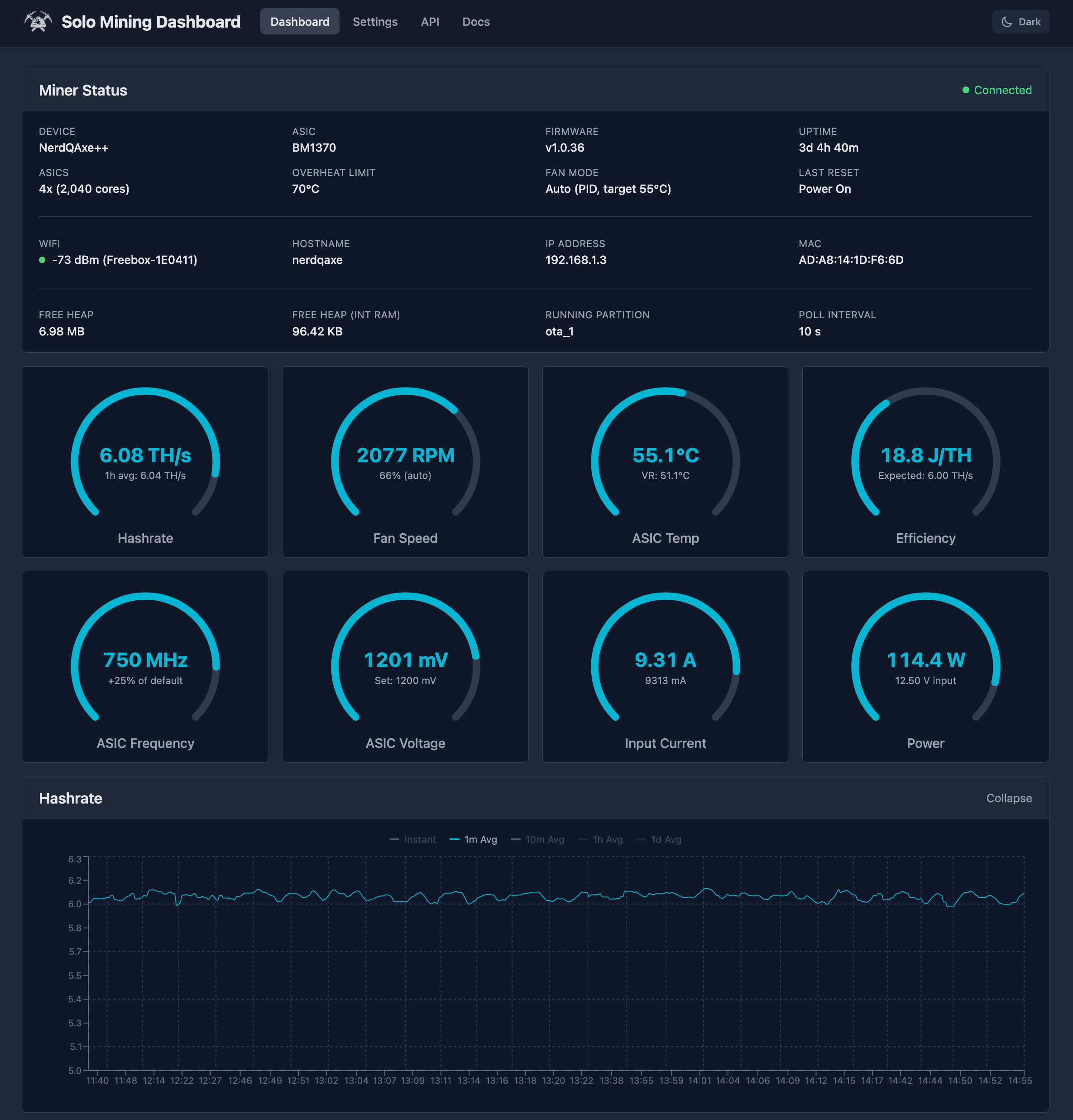
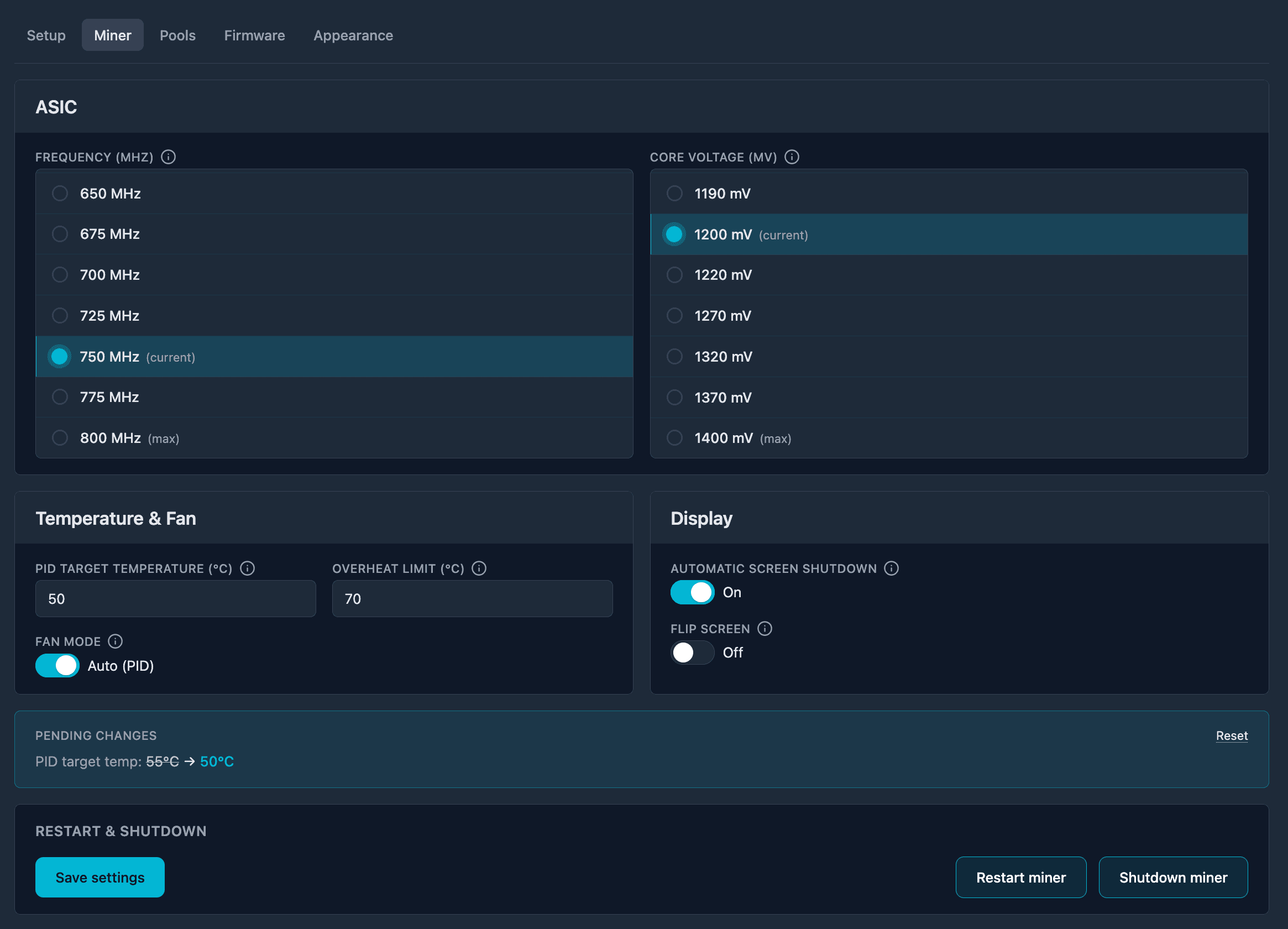
A real-time monitoring dashboard for the NerdQaxe++ Bitcoin Solo Miner and similar ESP based devices. This dashboard addresses limitations of the original AxeOS and enables controlled overclocking and advanced monitoring.
Features
- Monitoring: Live miner metrics, hashrate, temp, power, fan speed; history charts; shares and pool info; network difficulty and more.
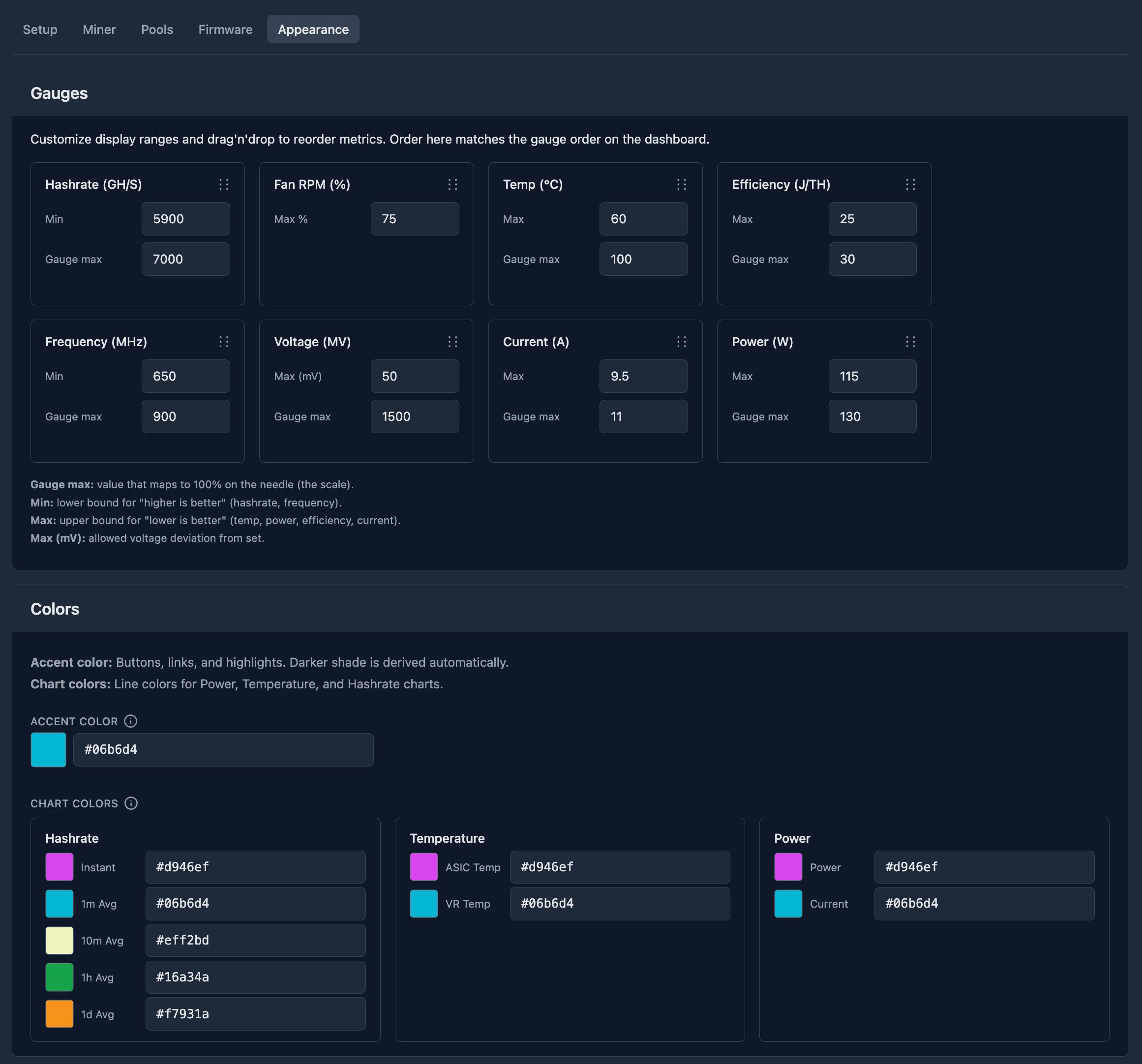
- Fully customizable: Adjust colors for accents, charts, gauges, and drag'n'drop to reorder gauges on the dashboard.
- Network context: Observe public network metrics via mempool.space.
- API monitoring: Check live API calls and results.
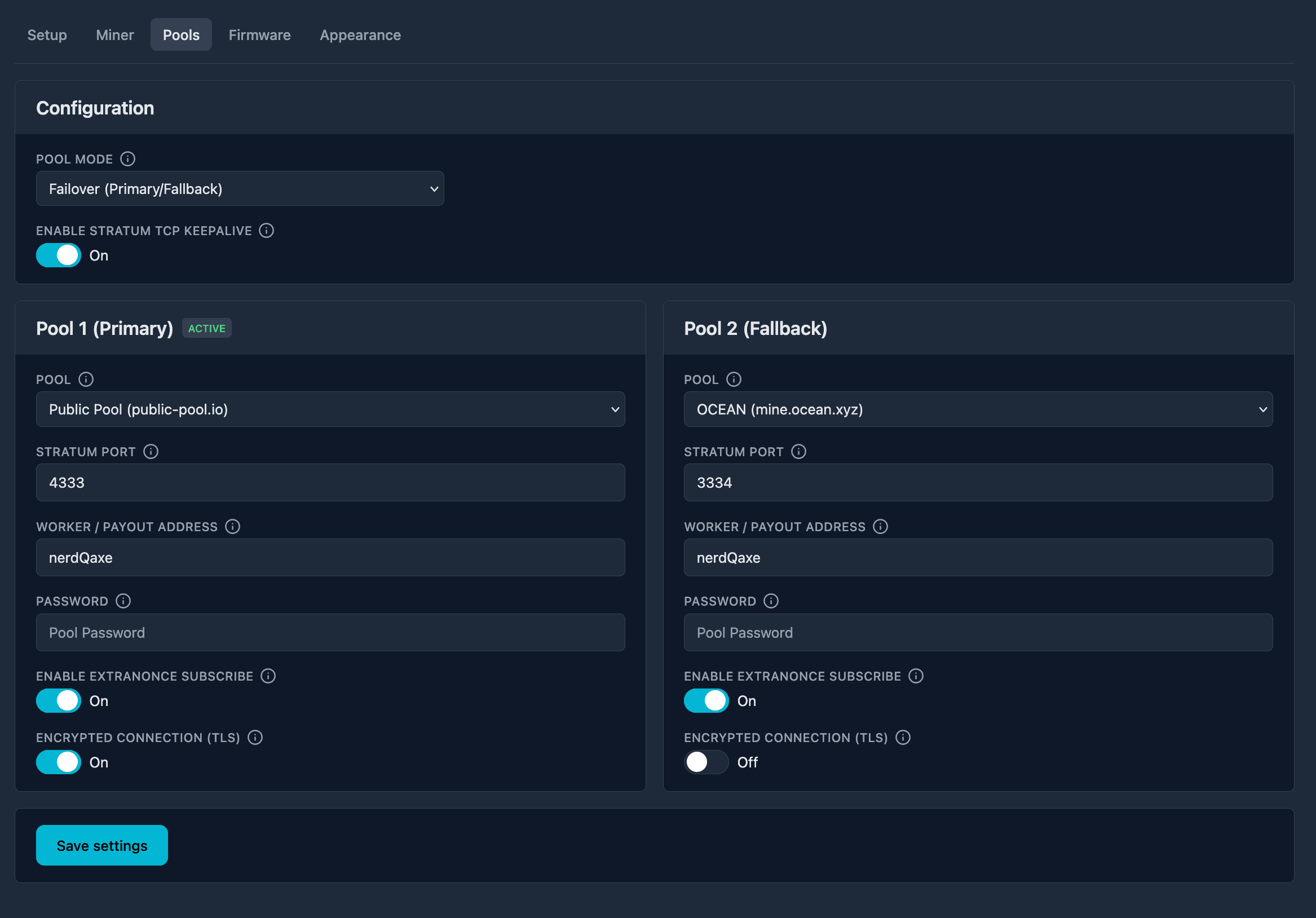
- Pool config: Made easy with useful presets and robust validation.
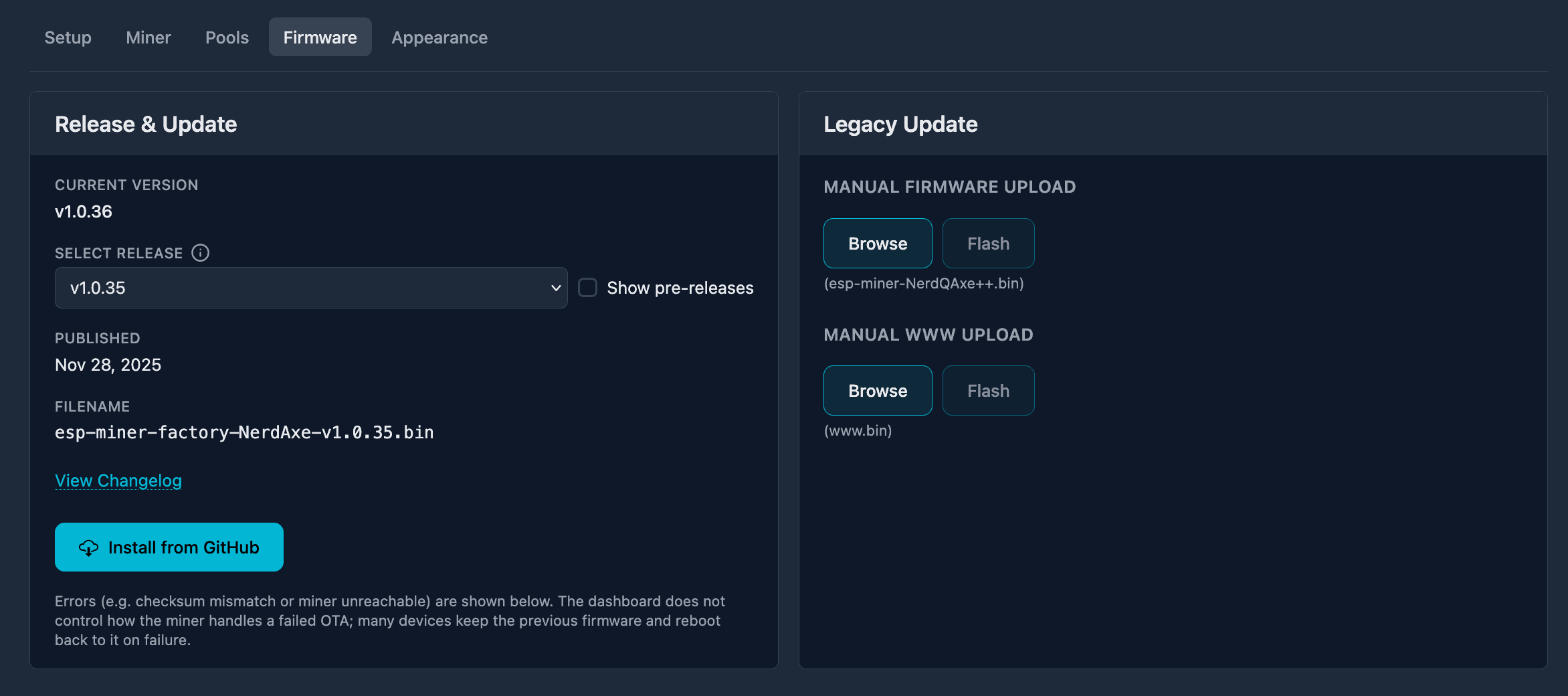
- Firmware updates: With checksum verification to protect hardware.
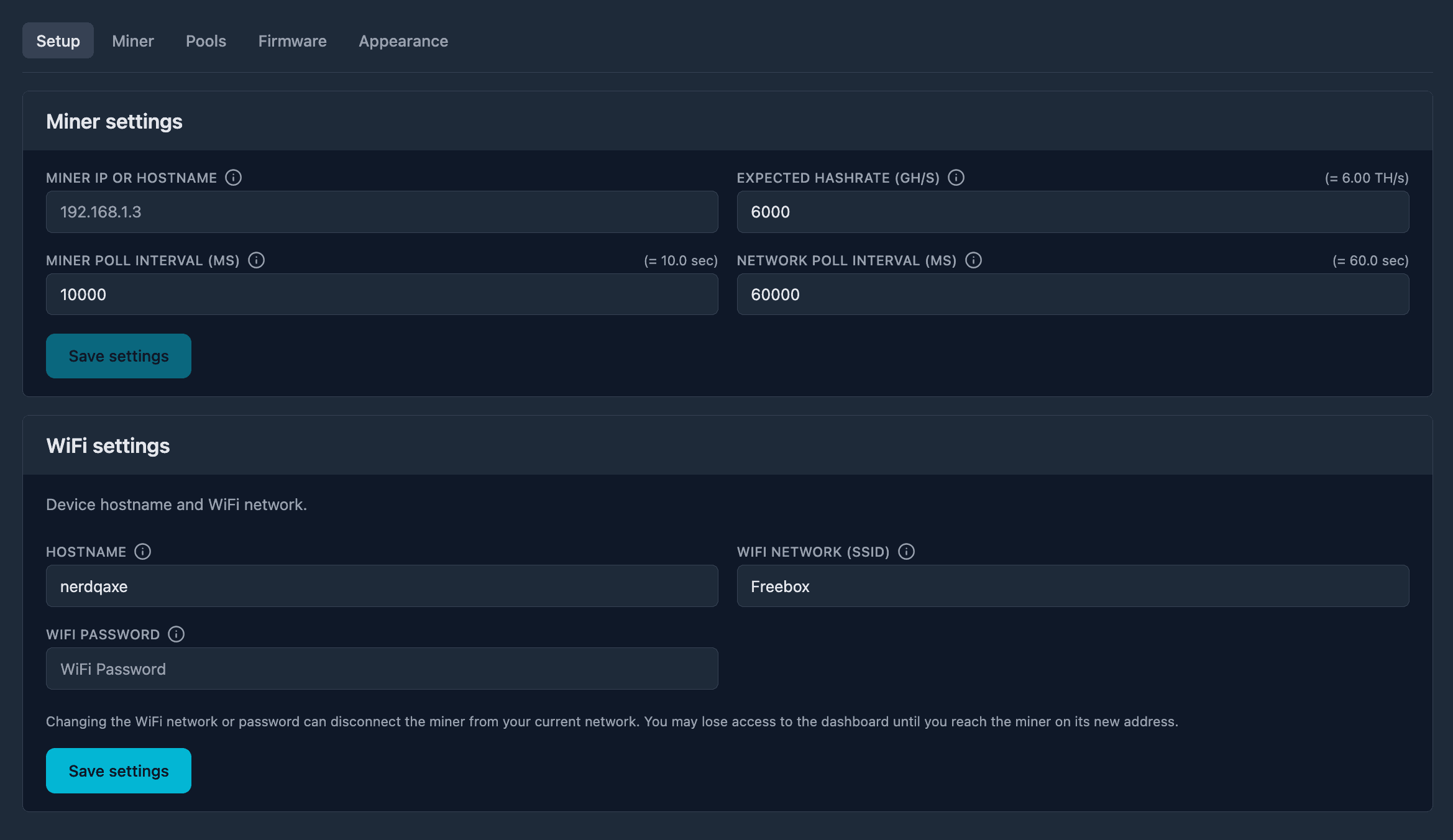
- Self-hosted: Runs on your machine; miner and dashboard data stay on your network.
Compatible devices
The dashboard talks to the miner over the ESP-Miner / AxeOS API (/api/system/info, etc.). ESP-Miner is open-source ESP32 firmware for the Bitaxe, NerdQaxe, and similar Bitcoin ASIC miners; devices running it (or AxeOS on top of it) expose the same web API. Compatible devices include the NerdQaxe++ and other ESP-based miners using this firmware.
Architecture
- Browser dashboard: A web UI (typically served locally or on your LAN) that polls or streams miner state over HTTP/WebSocket-style access to the device API.
- Miner firmware: ESP-Miner / AxeOS exposes structured JSON endpoints for system info, telemetry, and configuration; the dashboard visualizes that surface.
- Privacy-first: Self-hosted: telemetry stays on your network unless you choose to use external network context tools.
Tech Stack
- websocket: Live updates and streaming-style communication with the miner where supported.
- Node.js: Tooling and local server pieces that support the dashboard workflow.
- ASIC: Targets Bitcoin ASIC miners (e.g. NerdQaxe++) driven by ESP-class firmware.
- Real-time: Low-latency gauges and charts for hashrate, temperature, and pool activity.
- Self-hosted: Runs alongside your miner without requiring a centralized SaaS backend.